Brainwaves that can be present during sleep and meditation
When each ear receives a slightly different frequency, the brain perceives the relationship between them as a third tone.
ThirdTone begins with the binaural phenomenon and explores what emerges when overtone-rich acoustic architecture and interacting frequencies form a dynamic system.

The brain and body are shaped by interacting frequencies. Like octaves in music, these frequencies can double or halve while preserving their underlying relationships. This harmonic architecture extends across the brain and body, from the frequencies associated with delta, theta, alpha, beta, and gamma to corresponding organ frequencies. ThirdTone activates this architecture through sound.
These brainwave states are frequencies within a larger architecture that the brain and body continually synchronize within, and transition between.
Brainwaves that can be present during sleep and meditation

Studied in relation to memory, imagery, and internal attention.

Can be observed during relaxed wakefulness and present moment awareness

Brainwaves that can signal active attention, alertness, and problem-solving.

Studied in relation to integration and complex perception.
Entheoacoustics™
Entheoacoustics™ is the study and practice of the relational ecology of sound. It brings together neuroscience, psychoacoustics, systems thinking, artistic practice, and embodied listening.

Difference and beating patterns in ritual sound.

The overtone series as relationship made audible.

A documented third tone emerging between two pitches.

Separate tones presented to each ear reveal a beat perceived within hearing.

Binaural beats, perception, and the "cocktail party effect".

From isolated frequencies to cross-coupled dynamic systems.

Instruments become natureNature becomes instruments
Every track begins with live acoustic instruments. The double bass is the foundation of ThirdTone's frequencies and our signature sound. Other instruments and natural materials add texture, movement, and life.
.jpg)
Double Bass
ThirdTone is studying how difference tones, overtone-rich acoustic relationships, and active listening meet as a system.
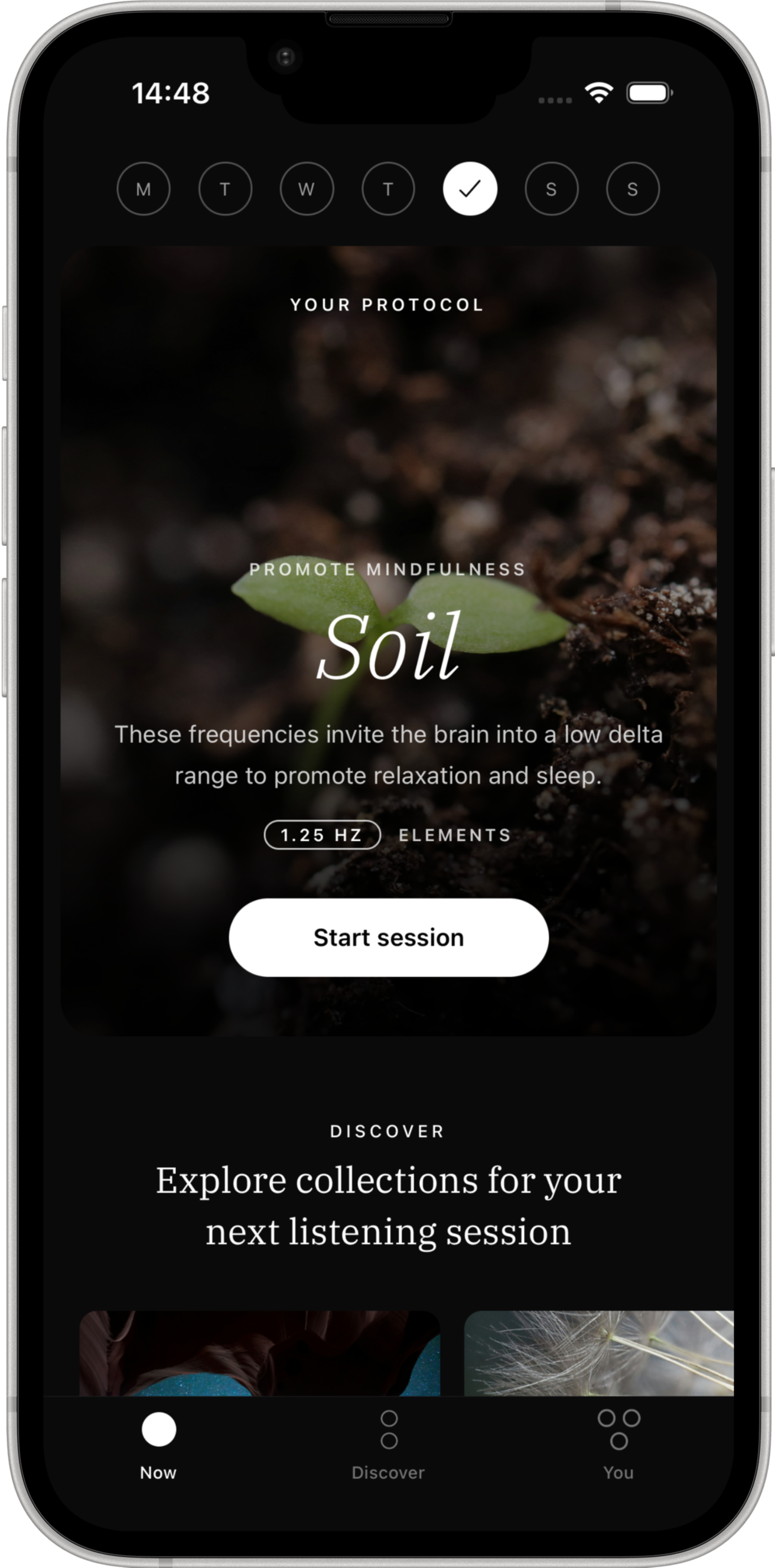
Visit the research library.Inside the ThirdTone app, the relationships explored on this page become formulas, journeys, and guided listening you can return to every day.
Download and listen to ThirdTone.